

LASIK vs SMILE: Which Laser Eye Surgery is Right for You?
July 21, 2026
What is PRK/LASEK? When Surface Laser Surgery is the Better Choice
July 28, 2026
When most people hear the words “cataract surgery,” they picture an older relative who had a straightforward procedure to restore basic vision, went home the same day, and continued wearing glasses much as they had before. That version of cataract surgery still exists, and it serves an important purpose. However, it represents only one end of the spectrum of what modern cataract surgery can achieve.
Premium cataract surgery takes the procedure considerably further, and for patients who want to reduce or eliminate their dependence on glasses at the same time as addressing their cataract, it is a genuinely transformative option.
Understanding the difference between standard and premium cataract surgery is the first step toward making an informed decision about your eyes. For those seeking cataract surgery in Pretoria, Dr Anesu Madikane offers a full range of premium intraocular lens options from her practice, and her approach to premium cataract surgery is built around delivering not just the removal of a cataract, but the best possible visual outcome for each individual patient.
This guide explains what premium cataract surgery involves, who it is suited for, and what you can realistically expect from the experience and the results.
What is a Cataract and Why Does it Need to be Treated?
A cataract is a clouding of the eye’s natural lens, which sits behind the iris and pupil. The natural lens is responsible for focusing light onto the retina, and when it becomes cloudy, the quality of vision deteriorates progressively. Patients with cataracts typically describe their vision as hazy, washed out, or blurry, and many notice increased glare and difficulty seeing clearly in bright light or at night.
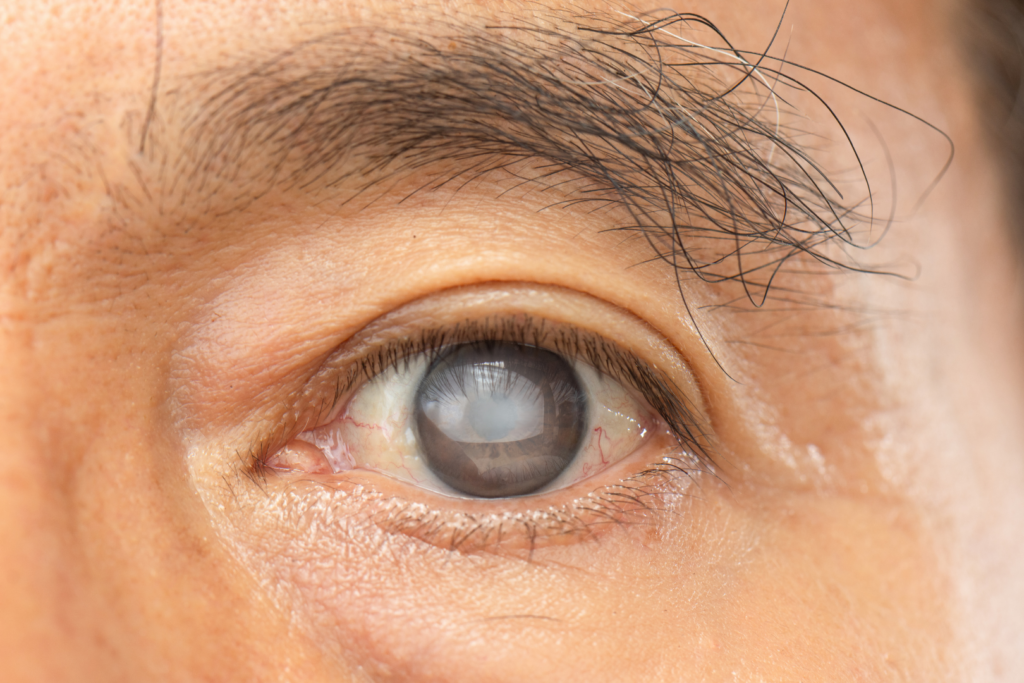
Cataracts develop most commonly as a result of the natural ageing process, though they can also be caused by prolonged UV exposure, certain medications, systemic conditions such as diabetes, or previous eye trauma. They cannot be reversed through medication or lifestyle changes. The only effective treatment is surgical removal of the cloudy lens, which is then replaced with an artificial intraocular lens.
Standard cataract surgery replaces the cloudy lens with a monofocal intraocular lens, which restores clarity of vision at one fixed focal point, typically distance. Most patients who receive a standard monofocal lens will still require reading glasses or bifocals for near and intermediate tasks. Premium cataract surgery goes beyond this by using advanced premium lens technology to address not only the cataract but also the patient’s underlying refractive error and, in many cases, their dependence on glasses across multiple distances.
What Makes Cataract Surgery “Premium”?
The term premium refers to the use of advanced intraocular lens technology and surgical precision that goes beyond what is included in standard cataract surgery. When cataract surgery is described as premium, it means that the procedure is being used not just to remove a cloudy lens, but to intentionally and refractively improve the overall quality and range of the patient’s vision through the careful selection and placement of an advanced intraocular lens.
This shift in approach changes the conversation significantly. Rather than simply asking “when does my cataract need to come out?”, patients undergoing premium cataract surgery are asking “what is the best possible vision I can achieve after this procedure, and which lens will get me there?” That is a more ambitious and more rewarding question to answer, and it is one that Dr Madikane is exceptionally well-placed to guide her patients through.
The precision involved in premium cataract surgery extends beyond lens selection. Advanced biometry is used to take highly accurate measurements of the eye, ensuring that the chosen lens is implanted with the greatest possible predictability. In some cases, femtosecond laser-assisted cataract surgery is used to enhance the precision of key surgical steps, further improving the accuracy of the outcome.
Premium Intraocular Lens Options: What Are Your Choices?
The lens you choose for your premium cataract surgery is one of the most important decisions in the entire process. Different lens types are designed to address different visual priorities, and understanding the options available to you is key to having a productive conversation with Dr Madikane about what is right for your eyes and your lifestyle.
Multifocal intraocular lenses are designed to provide clear vision at multiple distances simultaneously, typically distance, intermediate, and near. They work by incorporating multiple focal zones into a single lens, allowing the brain to select the appropriate focal point depending on what you are looking at. For patients who want to be largely free of glasses for most daily activities, multifocal lenses are a compelling option.
Trifocal lenses take this a step further by optimising vision across three distinct focal distances rather than two, providing a smoother and more continuous range of vision that many patients find particularly natural and comfortable. Extended Depth of Focus lenses, commonly referred to as EDOF lenses, work differently again by elongating the focal range rather than creating distinct focal points, which tends to result in excellent intermediate and distance vision with a reduced risk of the haloes and glare that some patients experience with multifocal designs.
Toric intraocular lenses are specifically designed to correct astigmatism at the time of cataract surgery, addressing the corneal irregularity that causes astigmatism in addition to replacing the cloudy natural lens. For patients with significant astigmatism, a toric lens can make a substantial difference to the quality of their post-operative vision without the need for additional laser treatment.
Femtosecond Laser-Assisted Cataract Surgery: Enhanced Precision
Femtosecond laser-assisted cataract surgery, often referred to as femto-laser cataract surgery, represents one of the most significant advances in surgical precision within the field of cataract surgery. The femtosecond laser is used to perform several of the most technically demanding steps of the procedure with a level of accuracy that exceeds what is achievable with manual techniques alone.
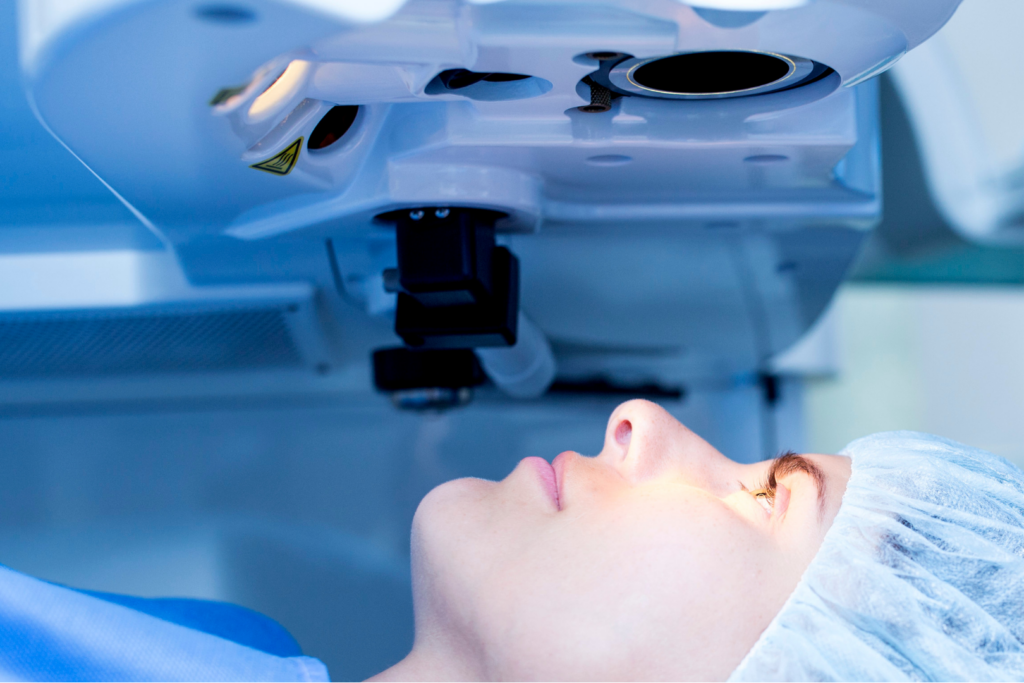
These steps include the creation of the corneal incisions, the precise circular opening of the lens capsule, and the initial softening and fragmentation of the cataract itself. By automating these steps with laser precision, the procedure becomes more predictable, the placement of the intraocular lens is more accurate, and the overall surgical experience is gentler on the eye.
For patients choosing premium intraocular lenses, particularly toric lenses where precise alignment is critical to achieving the intended correction of astigmatism, femtosecond laser assistance can make a meaningful difference to the final visual outcome. Dr Madikane will advise you during your consultation whether femto-laser assistance is appropriate and beneficial for your specific case.
Who is a Good Candidate for Premium Cataract Surgery?
Premium cataract surgery is most commonly recommended for patients who have been diagnosed with a visually significant cataract and who also have a meaningful refractive error they would like to address at the same time. It is particularly well-suited to patients who currently rely heavily on glasses or contact lenses and who would like to significantly reduce that dependence following surgery.
Patients in their fifties, sixties, and beyond who have developed cataracts alongside presbyopia are often excellent candidates for premium multifocal or trifocal lenses, as these can address the cataract, the distance prescription, and the loss of near vision all in a single procedure. Patients with astigmatism are similarly well-served by the addition of a toric lens to their surgical plan.
It is important to have realistic expectations about outcomes. While premium lenses significantly reduce the need for glasses in most patients, they do not guarantee complete independence from spectacles in every situation and for every task. Dr Madikane will give you a clear and honest picture of what your specific lens choice is likely to achieve based on your eye measurements and visual requirements.
Clearer Vision at Every Distance Starts With the Right Conversation
Premium cataract surgery is no longer simply about removing a cloudy lens and sending a patient home with a new pair of glasses. It is a precision-driven procedure that, in the right hands and with the right lens selection, can genuinely transform the way a patient experiences their vision across every distance and in every lighting condition.
The most important step in that process is the initial consultation, where your eyes are assessed in detail and the full range of options is laid out clearly and honestly. Dr Madikane brings a depth of training and a patient-first philosophy to every consultation she conducts.
Book your free assessment with Dr Anesu Madikane at Linton’s Corner Retail Park, Equestria today and find out how premium cataract surgery could not only restore your vision, but meaningfully elevate it.
Frequently Asked Questions
Is premium cataract surgery covered by medical aid in South Africa?
Standard cataract surgery is generally covered by medical aid in South Africa, as it is considered a medically necessary procedure once a cataract reaches a visually significant level. The additional costs associated with premium cataract surgery, including advanced intraocular lenses and femtosecond laser assistance, are typically not covered by medical aid and are charged as an additional out-of-pocket cost. Dr Madikane’s practice will provide you with a detailed breakdown of costs and what your specific medical aid plan is likely to cover during your consultation.
How do I know which intraocular lens is right for me?
The right lens depends on a combination of factors including your prescription, the health of your cornea and retina, your lifestyle, and your visual priorities. A patient who spends a great deal of time driving and reading may prioritise different things from a patient who works primarily on a computer. Dr Madikane takes a thorough and personalised approach to lens selection, using detailed biometry and a careful discussion of your daily visual demands to guide the recommendation.
What is the recovery like after premium cataract surgery?
Recovery after premium cataract surgery is generally smooth and relatively quick. Most patients notice a meaningful improvement in vision within the first day or two following surgery, though the brain may take several weeks to fully adapt to a premium multifocal or trifocal lens. Mild haloes or glare around lights are common in the initial period and typically diminish as neuroadaptation progresses. You will be seen regularly by Dr Madikane in the weeks following surgery to monitor your recovery and ensure your vision is developing as expected.
Can premium cataract surgery be performed on both eyes?
Yes, and it is standard practice to treat both eyes, typically with a short interval of one to two weeks between procedures. This allows Dr Madikane to assess the outcome in the first eye before proceeding with the second, and to make any refinements to the surgical plan if needed. Having both eyes treated ensures a balanced and cohesive visual outcome across your full range of vision.